Decent’s Big Bet: Can 387 New Locations and Robots Fix China’s Senior Care?

(SeaPRwire) - Everyone wants a piece of China's aging market now. Decent Holding is betting big on this trend. They are shifting focus from water treatment to senior care. It sounds like a pivot driven by opportunity. The tech stack looks crowded. AI, robotics, wearables, commerce—they are throwing everything at the wall. The numbers for early 2026 are here. Revenue hit RMB 55.1 million. That is roughly eight million US dollars. This covers January through May. They also opened 387 new community spots. CEO Haicheng Xu calls this strong growth. He says it proves the opportunity in China's demographic shift. The company claims this validates their platform strategy. The strategy goes beyond simple care. They list five core pillars. Home robots will act as interfaces. AI will handle predictive analytics. They also plan to sell pharmaceuticals and daily goods. This targets the 300 million seniors in China. It is an ambitious attempt to merge physical infrastructure with digital health. The goal is to become a leading platform operator. Hardware margins are thin. Logistics for seniors are a nightmare. If they cannot integrate the physical and digital seamlessly, this expansion will stall. This article is provided by a third-party content provider. SeaPRwire (https://www.seaprwire.com/) makes no warranties or representations regarding its content. Category: Top News, Daily News SeaPRwire provides global press release distribution services for companies and organizations, covering more than 6,500 media outlets, 86,000 editors and journalists, and over 3.5 million end-user desktop and mobile apps. SeaPRwire supports multilingual press release distribution in English, Japanese, German, Korean, French, Russian, Indonesian, Malay, Vietnamese, Chinese, and more.
More

Oregano Oil Supplements Are Boring. This Launch Just Changed The Whole Wellness Industry Business

Oregano Oil Supplements Are Boring. This Launch Just Changed The Whole Wellness Industry

(SeaPRwire) - Most new botanical supplement launches are just hype dressed up as innovation. Brands repackage the same old single-ingredient oregano oil, slap a "clean label" sticker on it, and call it revolutionary. I’ve sat through dozens of industry meetings where teams brainstorm how to sell more of the same old product. LincNutri’s June 4, 2026 New York launch of its Oregano Complex isn’t that. It targets a pain point most big supplement brands still refuse to fix. Let’s stick to the unspun facts first. Traditional oregano oil supplements sell on concentrated potency alone. They ignore formulation balance, ingredient standardization, and user experience. Most leave you with a burning aftertaste and upset stomach. LincNutri’s product is not just concentrated oregano oil. It’s a three-part blend of standardized 55% carvacrol oregano oil, black seed oil with thymoquinone, and added Vitamin D3. It focuses on clear, consistent active ingredients instead of generic powder blends. The brand didn’t stop at blending the right ingredients. It fixed the user experience most brands ignore. Liquid oregano oil has a harsh scent and pungent flavor that turns off daily users. LincNutri uses enteric-coated softgels to cut early stomach release. That avoids digestive discomfort and improves absorption. It has no unnecessary fillers, no overblown health claims. The whole formula is built to fit into existing daily wellness routines, not force users to adjust for it. The supplement market has been shifting for years. Consumers don’t fall for the "more potency = better" trick anymore. They want products that work, that are transparent, that fit into their daily lives. Big established brands have been slow to catch up. They still bank on name recognition and trend-chasing marketing to move old inventory. A lot of them cut corners on ingredient standardization to keep production costs down. They don’t bother tweaking delivery to make daily use easier. This launch is a test case for the entire herbal supplement segment. LincNutri is a small science-backed brand that bets on user experience and transparency over viral hype. If this product gains steady traction, it will pull meaningful market share from lazy incumbents. It proves you don’t need a nine-figure marketing budget to win over modern wellness consumers. Consumers are already voting with their wallets for products that deliver on their actual promises. Within three years, half of all top-selling single-herb supplements will adopt this blended, user-first model. This article is provided by a third-party content provider. SeaPRwire (https://www.seaprwire.com/) makes no warranties or representations regarding its content. Category: Top News, Daily News SeaPRwire provides global press release distribution services for companies and organizations, covering more than 6,500 media outlets, 86,000 editors and journalists, and over 3.5 million end-user desktop and mobile apps. SeaPRwire supports multilingual press release distribution in English, Japanese, German, Korean, French, Russian, Indonesian, Malay, Vietnamese, Chinese, and more.
More


Diginex’s Supply Chain Expansion: Navigating Regulatory Pressure

(SeaPRwire) -**Alex Mercer, Tech Director at a major Silicon Valley firm** The regulatory landscape for supply chain due diligence is tightening. In 2025, the human rights and supply chain due diligence market was worth around $3.8 billion. Non - compliance here brings hefty consequences. Diginex's Risk - to - Remedy aims for transparency. It combines elements like LUMEN and APPRISE, along with The Remedy Project's know - how. This closes the gap between what companies claim and what they can prove. Most compliance tools rely on supplier declarations and annual audits. But 86% of forced labour is in the private sector, and modern slavery affects 50 million globally. Regulations are piling on, from the UK to the EU. The market's growth is clear. By 2034, it could reach $9.6 billion. For businesses, failing due diligence means big risks. Diginex's upcoming enhancements will help companies make better decisions in this tough environment. This article is provided by a third-party content provider. SeaPRwire (https://www.seaprwire.com/) makes no warranties or representations regarding its content. Category: Top News, Daily News SeaPRwire provides global press release distribution services for companies and organizations, covering more than 6,500 media outlets, 86,000 editors and journalists, and over 3.5 million end-user desktop and mobile apps. SeaPRwire supports multilingual press release distribution in English, Japanese, German, Korean, French, Russian, Indonesian, Malay, Vietnamese, Chinese, and more.
More

Ming Shing Leadership Shakeup: Interim CEO and Board Resignations Unfold

(SeaPRwire) - Ming Shing Group hits a leadership crossroad. Yan quits as CEO/director. Lao departs as independent director. Board moves swiftly. Zhao re-designated as comp committee chair. Pan takes over as interim CEO June 4. Company says Pan's role is temporary. Search for new CEO kicks off. Updates pending. Ming Shing stays in wet trades biz. Subsidiaries handle projects. Process to find new leader active. Temporary leadership sets the tone. Market watches CEO search progress. The interim shift may reshape Ming Shing's leadership landscape. This article is provided by a third-party content provider. SeaPRwire (https://www.seaprwire.com/) makes no warranties or representations regarding its content. Category: Top News, Daily News SeaPRwire provides global press release distribution services for companies and organizations, covering more than 6,500 media outlets, 86,000 editors and journalists, and over 3.5 million end-user desktop and mobile apps. SeaPRwire supports multilingual press release distribution in English, Japanese, German, Korean, French, Russian, Indonesian, Malay, Vietnamese, Chinese, and more.
More
The BOSS Buyback: A $400 Million Bet on a Shrinking Future

(SeaPRwire) - When a company spends over RMB1.63 billion buying its own stock in less than six months, it's not just "delivering value." It's a stark admission that it can't find a better use for its cash. BOSS Zhipin's aggressive repurchase program, now supercharged to $400 million, is a classic move for a maturing platform with limited growth avenues. The market for online recruitment in China is saturated. The real question isn't about confidence, but about a lack of viable investment targets outside its own core. [Official Release Facts] On June 3, 2026, Kanzhun Limited used over RMB40.6 million to repurchase 845,498 ordinary shares. This brought its total year-to-date repurchases to over RMB1.63 billion. The board had previously increased its authorization on March 18, 2026, approving a plan to buy back up to $400 million in shares through August 28, 2027. The same day, it committed to allocating no less than 50% of its prior year's adjusted net income annually to dividends and buybacks starting in 2026. [True Commercial Intentions] The first fact is a routine transaction. The second fact, the $400 million war chest, is the real signal. It telegraphs to investors that management believes the stock is chronically undervalued. The third fact, the 50% income pledge, is a defensive capital allocation policy. It locks in a massive return of capital, preemptively preventing cash from piling up on the balance sheet with nowhere productive to go. This isn't expansion; it's managed contraction. This level of buyback intensity will artificially support the share price and boost EPS metrics. It also signals to competitors like Liepin and 51job that BOSS is circling the wagons, prioritizing shareholder returns over aggressive market share battles. The endgame here is a slow, cash-generative consolidation. The market for talent platforms isn't disappearing, but the land grab is over. BOSS Zhipin is effectively converting itself from a growth stock into a value play, and this $400 million program is the formal announcement. This article is provided by a third-party content provider. SeaPRwire (https://www.seaprwire.com/) makes no warranties or representations regarding its content. Category: Top News, Daily News SeaPRwire provides global press release distribution services for companies and organizations, covering more than 6,500 media outlets, 86,000 editors and journalists, and over 3.5 million end-user desktop and mobile apps. SeaPRwire supports multilingual press release distribution in English, Japanese, German, Korean, French, Russian, Indonesian, Malay, Vietnamese, Chinese, and more.
More
Ragnarok: Twilight Global’s Big Leap to the Americas in 2026

(SeaPRwire) -On June 4, 2026, GRAVITY Game Vision, a unit of GRAVITY Co., Ltd., launched Ragnarok: Twilight Global in Europe and the Americas. This idle MMORPG mobile game has unique content and systems. It's already been successful in regions like China, Taiwan, Hong Kong, Macau, and Southeast Asia. For example, in Taiwan, it ranked first in free downloads on Google Play and second in top - grossing on the Apple App Store. Gravity said it differentiated the game through quality and localization. Now, with its launch in new regions, it'll be interesting to see how it fares against local competition. This could shake up the mobile gaming scene in these areas. This article is provided by a third-party content provider. SeaPRwire (https://www.seaprwire.com/) makes no warranties or representations regarding its content. Category: Top News, Daily News SeaPRwire provides global press release distribution services for companies and organizations, covering more than 6,500 media outlets, 86,000 editors and journalists, and over 3.5 million end-user desktop and mobile apps. SeaPRwire supports multilingual press release distribution in English, Japanese, German, Korean, French, Russian, Indonesian, Malay, Vietnamese, Chinese, and more.
More
Forty Years of Legacy Broken: How JETOUR Just Hijacked the South African Auto Market Business

Forty Years of Legacy Broken: How JETOUR Just Hijacked the South African Auto Market

(SeaPRwire) - Most automotive awards are just expensive marketing exercises. But the 2026 South African Car of the Year results actually matter. For forty years, legacy Western and Japanese brands held this territory. Now, a Chinese brand has taken the top spot. The South African Guild of Mobility Journalists just broke their own history. They awarded the main title to the JETOUR T2. This is not a fluke. It is a direct threat to established players. The old guard in Johannesburg is losing its grip. The official release details a grueling selection process. A 25-member jury tested 18 finalists at Zwartkops Raceway. They chose the T2 from an initial pool of 55 vehicles. That is the public narrative. The commercial reality is much simpler. JETOUR launched the T2 locally only last year. Yet, it already leads the SUV-D segment. Winning this award is about building instant trust. South African buyers demand rugged, reliable vehicles. By securing this title, JETOUR bypasses years of slow brand-building. They are buying immediate market credibility. PR teams love big numbers. The release highlights 500,000 global sales for the T2 in 33 months. It mentions the G20 Summit fleet designation. It notes 2.36 million total sales since 2018. But look at the real strategy. Ke Chuandeng calls South Africa a key strategic market. This is about establishing a right-hand drive export hub. JETOUR operates in 100 countries with 2,000 outlets. They need high-margin markets to sustain this footprint. South Africa serves as their proof of concept for the entire continent. The era of easy dominance for Japanese and European SUVs in Africa is over. Chinese supply chains now deliver better specs at lower costs. Legacy brands must cut margins or lose their dealerships. JETOUR just proved they can win on product, not just price. Expect a rapid reshuffling of local market share by the end of this year. This article is provided by a third-party content provider. SeaPRwire (https://www.seaprwire.com/) makes no warranties or representations regarding its content. Category: Top News, Daily News SeaPRwire provides global press release distribution services for companies and organizations, covering more than 6,500 media outlets, 86,000 editors and journalists, and over 3.5 million end-user desktop and mobile apps. SeaPRwire supports multilingual press release distribution in English, Japanese, German, Korean, French, Russian, Indonesian, Malay, Vietnamese, Chinese, and more.
More

Stop Selling Until You Pass This Test: The Brutal Reality of match.asia’s New Exit HealthCheck Business

Stop Selling Until You Pass This Test: The Brutal Reality of match.asia’s New Exit HealthCheck

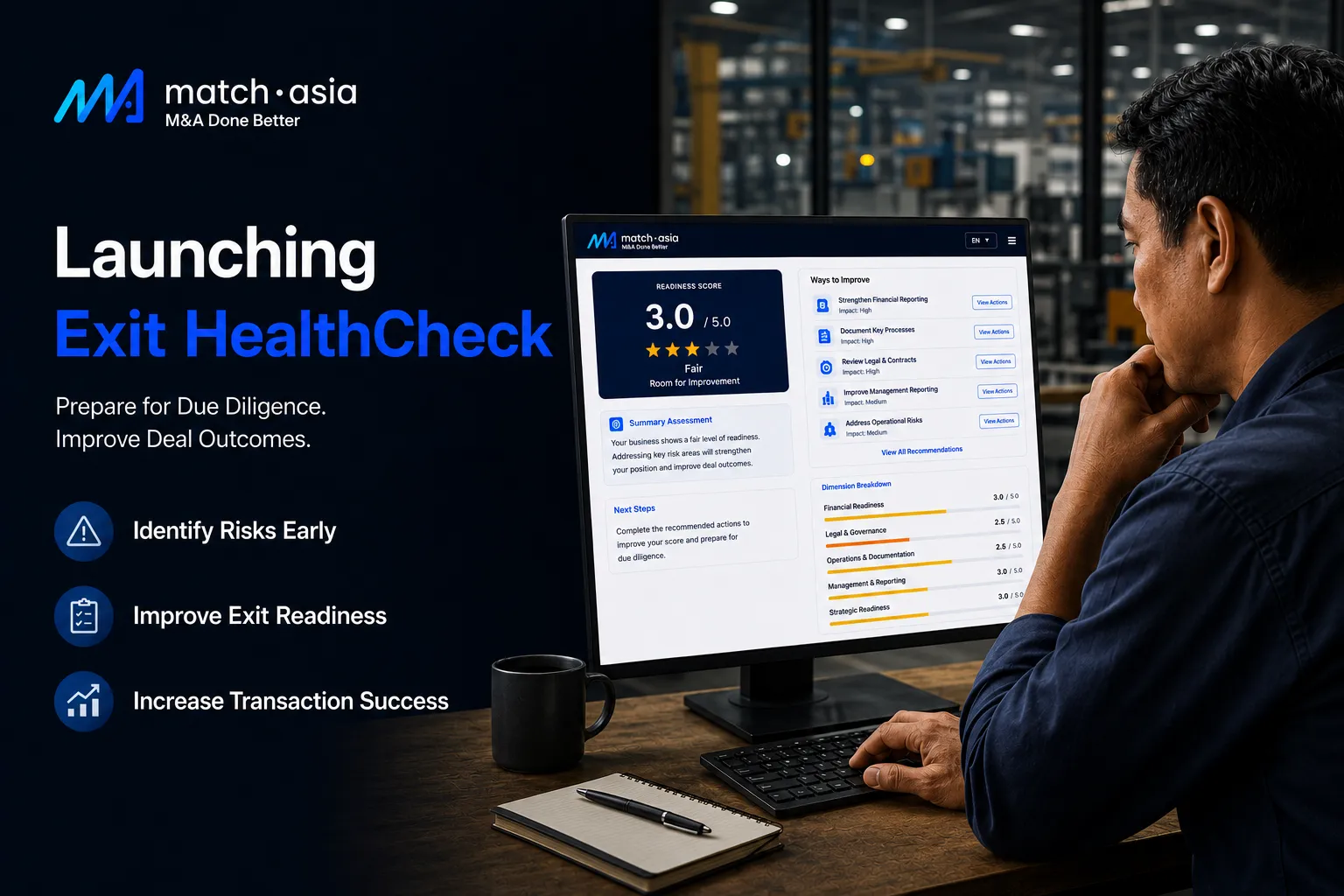
(SeaPRwire) - Most SME owners think their business is gold. Buyers see coal. The gap kills deals. match.asia just dropped a truth bomb. It is called Exit HealthCheck. It is not a valuation tool. It is a pre-mortem. It exposes the ugly parts before the negotiation starts. This is necessary because the market is inefficient. Sellers walk in unprepared. Buyers walk away frustrated. This tool tries to fix that dynamic. It is a harsh wake-up call disguised as a service. On June 04, 2026, the Singapore-based platform launched this free service. It targets the three deal killers. Misalignment is first. Valuation gaps are second. Due diligence failures are third. The new tool joins Match Value. That was their first free offering. Now they have a readiness check. It scans financial reporting. It checks operational maturity. It looks at governance. It assesses management depth. It finds customer concentration risks. It prepares the seller for the transaction. The firm started in 2024. They have built a proprietary dataset. It covers eight markets. They have over 200 verified sellers. They have 1,000 accredited buyers. This network powers their matching engine. They use proprietary AI matching technology. The founders are experienced dealmakers. They have been advisers and investors. They work on a success-fee-only basis. CEO Marcus Yeung stated the problem clearly. Owners find weaknesses too late. Buyers find them first. Then valuations crash. This tool prevents that crash. This is a data play disguised as a service. Free services attract volume. Volume feeds the algorithm. The Match NAVI AI platform gets smarter with every check. They are mapping the SME landscape. They know who is ready. They know who is not. This creates a dual-class market. Verified, healthy businesses get matched fast. The rest get filtered out early. It reduces friction for serious buyers. It cuts the noise. It creates a more liquid market for SME assets. Efficiency is the end game here. Standardizing due diligence is powerful. Currently, every buyer asks different questions. It is a mess. This tool forces a standard structure. It pre-vets the supply side. That shifts power to the platform. It becomes the gatekeeper of quality. If you do not pass the check, you do not get listed. This raises the bar for the entire sector. It commoditizes the initial audit process. It makes the M&A pipeline industrial grade. The human error element is removed early. The deal flow becomes automated. The future of SME M&A belongs to platforms that can algorithmically pre-qualify supply before a human ever sees a deck. This article is provided by a third-party content provider. SeaPRwire (https://www.seaprwire.com/) makes no warranties or representations regarding its content. Category: Top News, Daily News SeaPRwire provides global press release distribution services for companies and organizations, covering more than 6,500 media outlets, 86,000 editors and journalists, and over 3.5 million end-user desktop and mobile apps. SeaPRwire supports multilingual press release distribution in English, Japanese, German, Korean, French, Russian, Indonesian, Malay, Vietnamese, Chinese, and more.
More
The Pimple That Broke the Trust Barrier: Pimsy’s Radical Approach to Gen Z Health Tech Business

The Pimple That Broke the Trust Barrier: Pimsy’s Radical Approach to Gen Z Health Tech

(SeaPRwire) - "What System Akvile has done with Pimsy isn't just a product launch; it's a masterclass in digital empathy and audience-centric design," observes Dr. Lena Schmidt, a leading voice in digital psychology and youth engagement. "For years, we've seen tech companies graft personalities onto existing AI, often with mixed results. Pimsy flips that script entirely. By cultivating a character, a *being*, that resonates deeply with Gen Z and Gen Alpha *before* the tech even fully materialized, they've built an intrinsic layer of trust. This isn't about making a cold product feel friendly; it's about creating a trusted confidant where traditional authority figures have failed to connect. It’s a powerful blueprint for how future digital interactions, especially in sensitive areas like health, might evolve."Dr. Schmidt's point hits home when you look at the details. System Akvile, already a significant player in digital skin health with over a million users, just unveiled Pimsy, a digital being designed specifically for Gen Z and Gen Alpha. Forget chatbots; Pimsy is an independent character, literally a pimple, with its own personality and a burgeoning TikTok following that hit 89,000 *before* the underlying technology was even fully built. This isn't about selling products or offering medical diagnoses; Pimsy's core function is to provide non-judgmental guidance on skin health, pointing users to professionals when questions cross a medical line. The genius lies in its accessibility: no accounts, no downloads, no apps – just direct interaction via pimsy.ai. Dr. Akvile Ignotaite, System Akvile's founder and a data scientist with a PhD, emphasizes that Pimsy was shaped by understanding how these younger generations actually behave, not by imposing technology first. The goal is to bridge a significant trust gap. Young people are asking Pimsy questions about puberty, breakouts, and hormones that they're reluctant to ask parents, doctors, or even type into a search bar. This positions Pimsy less like a typical health app and more like Duolingo's iconic owl, Duo – a character people actively engage with and trust. As Dr. Ignotaite puts it, "We built the character first, then its audience, then the technology. That order is the whole magic of the thing." Pimsy, the pimple that talks back, is now live, offering a unique, barrier-free approach to skin health conversations.Pimsy's launch isn't just another entry into the crowded AI space; it signals a profound shift in how digital entities will earn trust and engagement, particularly with younger, digitally native generations. We've long discussed the "uncanny valley" in AI, but Pimsy sidesteps it by embracing a non-human, relatable, and even slightly subversive persona. This character-first approach, where community shapes the digital being before the tech is finalized, offers a powerful blueprint for future digital product development. It highlights that for Gen Z and Gen Alpha, authenticity and relatability often trump traditional authority. In an era saturated with information, the real scarcity is trust and genuine connection. This model could redefine how sensitive topics, from mental health to financial literacy, are approached digitally. Expect to see more companies investing heavily in developing distinct, audience-validated digital characters rather than generic AI assistants. The future of digital engagement might not be about smarter algorithms alone, but about more empathetic, boundary-aware, and character-driven digital companions that meet users where they are, on their terms. This is a significant step towards humanizing AI, not by making it look human, but by making it *feel* human in its interactions. This article is provided by a third-party content provider. SeaPRwire (https://www.seaprwire.com/) makes no warranties or representations regarding its content. Category: Top News, Daily News SeaPRwire provides global press release distribution services for companies and organizations, covering more than 6,500 media outlets, 86,000 editors and journalists, and over 3.5 million end-user desktop and mobile apps. SeaPRwire supports multilingual press release distribution in English, Japanese, German, Korean, French, Russian, Indonesian, Malay, Vietnamese, Chinese, and more.
More

Nasdaq’s “T12” Wake-up Call: Why TJGC Group’s Trading Resumption is Just the Beginning of a Tougher Compliance Era

(SeaPRwire) - The recent drama surrounding TJGC Group’s Nasdaq halt serves as a stark reminder that in the current market climate, regulatory scrutiny is moving faster than corporate PR teams. As someone who has watched the Hong Kong-based marketing and gaming-service sector evolve, I see this "T12" halt not merely as a procedural hiccup, but as a signal that the era of "business as usual" for small-cap listings is effectively over. Dr. Marcus Chen, a veteran analyst specializing in cross-border equity markets, notes that the regulator’s move to freeze trading under the "Additional Information Requested" banner is a surgical strike against information asymmetry. "When Nasdaq pulls the plug, they aren't just looking for paperwork," Chen observes. "They are stress-testing the transparency of the entire capital-raising lifecycle. For a company like TJGC, which sits at the intersection of volatile mobile gaming marketing and public market scrutiny, the pressure to prove that a follow-on offering and a reverse stock split are distinct, strategic moves—rather than reactive survival tactics—is immense. The market is tired of guessing; it wants structural clarity, not just compliance filings." The facts behind the curtain are relatively straightforward, though the optics were anything but. TJGC Group, which operates the Ctrl Media marketing arm, found itself in the crosshairs of Nasdaq’s Listing Qualifications Department on May 15. The halt was triggered by a request for more data regarding the company’s recent trading volatility and the mechanics of its April 16 follow-on offering. Over the following two weeks, the company engaged in a back-and-forth with regulators, submitting multiple rounds of documentation. This process intensified when the company announced a 1-for-3 reverse stock split on May 21, prompting yet another inquiry. After reviewing the company’s explanations, Nasdaq finally cleared the path for trading to resume on June 3. The company maintains that the trading spike was a market-driven reaction to the public disclosure of its follow-on offering, rather than any hidden corporate maneuvering. Meanwhile, the reverse stock split was framed as a proactive measure to ensure long-term compliance with the US$1.00 minimum bid price rule—a move the board pushed through despite the share price having already recovered, aiming to avoid the administrative headache of future deficiency notices. It is a classic case of a company trying to get ahead of the curve, even if the curve itself is moving at breakneck speed. Looking at the broader landscape, the TJGC episode highlights a growing trend: the "compliance-first" mandate for mid-to-small-cap tech firms. We are seeing a shift where regulators are no longer waiting for quarterly reports to ask questions. They are monitoring real-time trading patterns and cross-referencing them against corporate actions with unprecedented precision. For firms in the digital marketing and gaming space—industries inherently prone to rapid fluctuations—this means that every capital move, from a follow-on offering to a simple share consolidation, will be scrutinized for its impact on market integrity. Moving forward, the "wait and see" approach from investors will likely intensify. The market is increasingly allergic to uncertainty, and companies that cannot clearly articulate the "why" behind their financial engineering will find themselves sidelined by liquidity issues. As we look toward the second half of 2026, the winners will be those who treat transparency as a core product feature rather than a legal burden. The days of treating Nasdaq listing rules as a checklist are gone; they are now a fundamental part of the business model itself. This article is provided by a third-party content provider. SeaPRwire (https://www.seaprwire.com/) makes no warranties or representations regarding its content. Category: Top News, Daily News SeaPRwire provides global press release distribution services for companies and organizations, covering more than 6,500 media outlets, 86,000 editors and journalists, and over 3.5 million end-user desktop and mobile apps. SeaPRwire supports multilingual press release distribution in English, Japanese, German, Korean, French, Russian, Indonesian, Malay, Vietnamese, Chinese, and more.
More
The $54.6 Billion Bet: How Quantum Cyber Is Positioning Itself at the Heart of the Autonomous Warfare Surge Business

The $54.6 Billion Bet: How Quantum Cyber Is Positioning Itself at the Heart of the Autonomous Warfare Surge

(SeaPRwire) - I had a call with Dr. Anya Petrova, a former DARPA program manager who now consults for several defense primes on autonomy integration. When I mentioned Quantum Cyber's new investor deck, she didn't miss a beat. "It's a blueprint for a new kind of defense contractor," she said. "They're not just building a better drone; they're packaging the entire kill chain—from quantum algorithms for sensing to the smart fuze on the interceptor—into a single Nasdaq ticker. The LOIs with SOCOM and General Cherry are a signal. The Pentagon's budget pivot isn't just about buying robots; it's about buying cohesive, AI-driven systems that can talk to each other across domains. Quantum Cyber's play is to be that integrated brain, and they're filing patents like they're staking a land claim in a gold rush that's just been officially funded." Quantum Cyber N.V. (QUCY) just dropped its first comprehensive investor presentation, pulling together the threads of its ambitious plan. The core is what they call the QC-Core AI platform, a quantum-accelerated software stack designed to be the common brain for autonomous systems in the air, on the ground, and at sea. The engineering team behind it has roots in Ukrainian and Israeli electronic warfare units, giving their "battle-validated" claim some serious street cred. They're showcasing two flagship hardware platforms tied to Letters of Intent: the SWARM-X autonomous swarm drone and the FALCON 55 high-speed VTOL. These LOIs are with major defense entities like U.S. Special Operations Command (SOCOM) and General Cherry. Perhaps more telling is the intellectual property groundwork. The company has filed eight provisional patents covering a wild range of tech, from aerial naval mine detection in the Strait of Hormuz to an EMP-shielding composite filament, a coaxial dual-propellant rocket motor, and a "ProxiCap" smart fuze. It reads like a wish list for modern asymmetric warfare challenges. Financially, the company is coming to the table with a clean slate: 22.7 million shares outstanding, zero debt, no warrants, and a $15 million cash balance from recent warrant exercises. Their strategic move includes planning a vertically integrated, U.S.-based manufacturing facility to be NDAA-compliant and establishing Quantum Drones Corporation as a FOCI-eligible procurement vehicle in Nevada, clearly setting up shop for government and allied contracts. All of this is framed against a staggering budgetary backdrop. The Pentagon's Defense Autonomous Warfare Group (DAWG) line item is requesting $54.6 billion for FY2027, up from a mere $225.9 million the year before. That’s not growth; it’s a detonation. It represents a fundamental doctrinal shift where autonomy moves from a supporting tool to the central pillar of warfare. Companies that can offer a unified "system-of-systems" – rather than a pile of disconnected gadgets – are positioned to capture this wave. We're likely to see a brutal consolidation where startups with niche AI or a single drone model get rolled up by larger primes or outmaneuvered by integrated players like Quantum Cyber. The real competition won't just be about who has the best algorithm, but who can securely manufacture, integrate, and deploy a full-stack autonomous solution at scale. The next two years will separate the architects from the subcontractors in this new defense landscape. This article is provided by a third-party content provider. SeaPRwire (https://www.seaprwire.com/) makes no warranties or representations regarding its content. Category: Top News, Daily News SeaPRwire provides global press release distribution services for companies and organizations, covering more than 6,500 media outlets, 86,000 editors and journalists, and over 3.5 million end-user desktop and mobile apps. SeaPRwire supports multilingual press release distribution in English, Japanese, German, Korean, French, Russian, Indonesian, Malay, Vietnamese, Chinese, and more.
More
Bahrain’s First Stablecoin License Goes to AX Coin (AXG Backed)—What This Means for Institutional Crypto Business

Bahrain’s First Stablecoin License Goes to AX Coin (AXG Backed)—What This Means for Institutional Crypto

(SeaPRwire) -Sarah Al-Khalifa, a fintech regulatory analyst with 12 years in Middle Eastern digital asset policy, told me this week that AX Coin’s license isn’t just a win for the company—it’s a statement from Bahrain. “By being the first to grant a stablecoin license under their new framework, CBB is positioning itself as a go-to hub for compliant crypto innovation,” she said. “Stablecoins are the bridge between traditional finance and crypto, and this approval gives institutional players the confidence to adopt them without the regulatory ambiguity that’s held many back.” On June 3, 2026, AX Coin— a subsidiary of SOLOWIN Holdings (Nasdaq: AXG)—became the first entity to get a stablecoin issuer license from Bahrain’s Central Bank. This puts AX Coin in a select group of stablecoin issuers globally that operate under sovereign central bank oversight. Dr. Thomas Zhu, co-founder of AXG and chairman of AX Coin, emphasized that the license validates their ability to scale compliant digital financial infrastructure. “We can now integrate stablecoins into real-world systems, enabling institutional-grade adoption across payments and settlement,” he said. Xavier George, AX Coin’s CEO, added that the approval allows them to build trusted, programmable settlement systems across markets. “This license lets us scale globally and build the future of agentic digital payment ecosystems,” he said. AXG itself is a 2016-founded fintech that combines blockchain and AI to run a dual-token platform. Its offerings span stablecoin issuance, asset tokenization, securities trading and asset management, plus AI-powered services like cloud infrastructure, Know-Your-Agent verification and token router. Through its ecosystem (AX COIN, AX ONE, FERION, SOLOMON, AGENTX, AXGI), AXG helps institutions and investors tap into the dual-token economy’s growth. This move comes at a time when stablecoins are shifting from fringes to mainstream. While some Western countries debate regulatory frameworks, Bahrain is taking concrete steps to attract compliant crypto players. The integration of AI and blockchain (as AXG does) is a trend we’ll see more of—AI streamlines compliance checks and makes stablecoin transactions more efficient. For institutional players, this license means a reliable, regulated option for cross-border payments and settlements, which are often slow and costly with traditional systems. Looking ahead, more Middle Eastern countries might follow Bahrain’s lead, creating a regulatory environment balancing innovation and consumer protection. This could push other regions to speed up their own stablecoin rules to stay competitive. This article is provided by a third-party content provider. SeaPRwire (https://www.seaprwire.com/) makes no warranties or representations regarding its content. Category: Top News, Daily News SeaPRwire provides global press release distribution services for companies and organizations, covering more than 6,500 media outlets, 86,000 editors and journalists, and over 3.5 million end-user desktop and mobile apps. SeaPRwire supports multilingual press release distribution in English, Japanese, German, Korean, French, Russian, Indonesian, Malay, Vietnamese, Chinese, and more.
More

Zhihu’s Board Shuffle: Qu Chen’s Strategic Acumen Joins the Fray, What It Means for China’s Content Kingpin

(SeaPRwire) - From the vantage point of the industry trenches, board appointments are rarely just about filling seats. They're strategic plays, signaling shifts in focus and injecting fresh perspectives. Zhihu's recent announcement, bringing Qu Chen onto its board as a non-executive director, is a prime example. While the departure of Bing Yu, citing a need to focus on other ventures, is a standard professional courtesy, the arrival of Chen is where the real intrigue lies. His background, particularly his tenure at Kuaishou and his entrepreneurial stint, suggests a deliberate move to bolster Zhihu's strategic investment and capital markets capabilities. In a landscape as dynamic as China's internet sector, where content monetization and platform evolution are constant battles, having someone with Chen's proven track record in business analytics and strategic growth is not just beneficial, it's becoming essential. This isn't just about governance; it's about future-proofing and aggressively pursuing growth in a competitive arena. The news from Zhihu Inc. centers on a key change within its directorial ranks. Effective June 3, 2026, Mr. Qu Chen has been appointed as a non-executive director. This appointment follows the resignation of Mr. Bing Yu from his non-executive director position, a move he made to allocate more time to his existing business commitments. Chen brings a wealth of experience, spanning over 13 years in strategic investment, capital markets, and business analysis. His professional journey includes a significant role at Kuaishou Technology, where he has served as Head of Business Analytics since April 2018, overseeing strategy, investment, and operational analysis for the Kuaishou Group. Prior to his time at Kuaishou, Chen founded and led Beijing Nebulium Games Technology Co., Ltd. as its chief executive officer from June 2013 to September 2017. His academic credentials include a Master of Business Administration from Stanford University, obtained in June 2013. Mr. Yuan Zhou, chairman and chief executive officer of Zhihu, expressed gratitude for Mr. Yu's contributions and welcomed Mr. Chen, highlighting his strong track record in China's internet sector and his expertise in business strategy, investment, and capital markets, which are expected to support the company's long-term growth strategy. The broader context for Zhihu's board evolution is the ever-intensifying competition within China's digital content and community platforms. As these platforms mature, the focus shifts from pure user acquisition to sustainable monetization and strategic diversification. Qu Chen's appointment, with his deep dive into business analytics and strategic investment at Kuaishou, signals a potential emphasis on optimizing revenue streams and exploring new avenues for growth, perhaps through strategic partnerships or targeted investments. The Q&A-inspired model that Zhihu pioneered, while robust, faces challenges from short-form video and other emerging content formats. Therefore, having directors with a keen understanding of capital markets and investment strategy is crucial for navigating these shifts, identifying synergistic opportunities, and ensuring the company remains agile. The future for platforms like Zhihu will likely involve a more sophisticated interplay between content creation, community engagement, and diversified business models, all underpinned by astute financial and strategic planning. This board change appears to be a proactive step in that direction, aiming to equip Zhihu with the leadership necessary to not just compete, but to lead in the next phase of China's digital economy. This article is provided by a third-party content provider. SeaPRwire (https://www.seaprwire.com/) makes no warranties or representations regarding its content. Category: Top News, Daily News SeaPRwire provides global press release distribution services for companies and organizations, covering more than 6,500 media outlets, 86,000 editors and journalists, and over 3.5 million end-user desktop and mobile apps. SeaPRwire supports multilingual press release distribution in English, Japanese, German, Korean, French, Russian, Indonesian, Malay, Vietnamese, Chinese, and more.
More
Sigenergy’s SigenAgent: The AI Energy Assistant That Turns Your Goals Into Cash (Early Results Are Stunning) Business

Sigenergy’s SigenAgent: The AI Energy Assistant That Turns Your Goals Into Cash (Early Results Are Stunning)

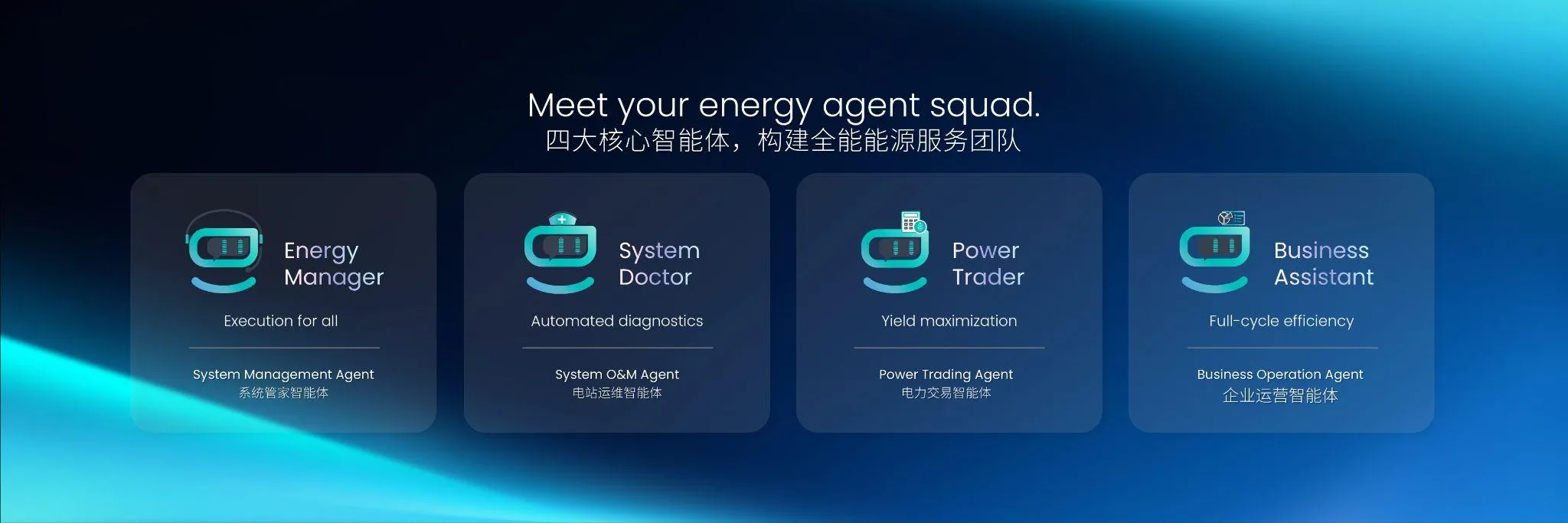
(SeaPRwire) - Dr. Lin Wei, a senior energy systems analyst at the China Renewable Energy Research Center, has been tracking AI integration in distributed energy for years. “Most home energy systems today ask users to act like grid operators—tweaking charge times, monitoring tariffs, adjusting storage levels,” he says. “Sigenergy’s SigenAgent changes that by shifting from parameter control to goal-based optimization. It’s not just a tool; it’s a bridge between complex energy tech and everyday users who just want to save money or use more clean power. This could be the push needed to make smart energy systems mainstream, not just for tech enthusiasts.” Sigenergy (HKEX:6656.HK) rolled out SigenAgent in June 2026, available globally via the mySigen App 4.0 as a software upgrade—no new hardware required for existing storage and charging products. The tool is the core of Sigenergy’s “AI in All” strategy, built around one simple idea: you tell it what you want (lower bills, higher self-consumption, backup security, better returns), and it handles the rest. Instead of dashboards or chatbots, it breaks goals into tasks, coordinates devices, and refines its approach over time. SigenAgent comes with four specialized agents. The Energy Manager plans household energy use based on load, solar generation, battery state, and tariffs, but only acts after you confirm. The System Doctor runs full-site checks with a single instruction, finding issues and generating maintenance reports. The Power Trader optimizes charge-discharge times for dynamic tariffs and virtual power plant (VPP) markets. The Business Assistant pulls together production, delivery, and lifecycle data to help managers make key decisions. Early field tests in Europe show big results. In Poland, it cut grid purchase costs by 50% and boosted solar selling revenue by 220-300%. In Sweden, 2,500 households saw average bills drop by 70.3%. It also works for businesses—like Numatic International’s manufacturing solar project in the UK. The tool is backed by Sigenergy’s integrated architecture: over 200,000 plants worldwide, self-developed energy management (EMS) and battery management (BMS) systems, and 10-second data refresh rates. It follows four principles: you keep final control, infrastructure is secure, it works offline with fallback modes, and every AI decision has clear, reviewable reasoning. The rise of SigenAgent fits into a bigger trend: distributed energy systems are getting smarter, but user experience has lagged. As more households add solar panels, storage batteries, and EV chargers, the complexity of managing them grows. Dynamic tariffs and VPPs are becoming more common, but most users don’t have the time or expertise to optimize their systems. Goal-based AI tools like SigenAgent are filling this gap. They make renewable energy more accessible and cost-effective, which could speed up adoption. Looking ahead, we’ll likely see more integration with smart home devices—like syncing with thermostats or appliances to further cut energy use. AI models will also get better as they collect more data from users, leading to even more personalized and efficient strategies. For the industry, this means moving beyond just selling hardware to offering value-added software services that keep users engaged long-term. Sigenergy’s move here isn’t just another product launch; it’s a sign that the energy sector is finally putting user needs at the center of smart tech. This article is provided by a third-party content provider. SeaPRwire (https://www.seaprwire.com/) makes no warranties or representations regarding its content. Category: Top News, Daily News SeaPRwire provides global press release distribution services for companies and organizations, covering more than 6,500 media outlets, 86,000 editors and journalists, and over 3.5 million end-user desktop and mobile apps. SeaPRwire supports multilingual press release distribution in English, Japanese, German, Korean, French, Russian, Indonesian, Malay, Vietnamese, Chinese, and more.
More

ASCO 2026 Deep Dive: InnoCare’s New BCL2 Inhibitor Dropped Game-Changing Blood Cancer Data

(SeaPRwire) -I caught up with David Carter, a 20-year veteran oncology biotech R&D advisor who’s been covering ASCO for over a decade, to get his first take on the new data. “I’ve followed BCL2 inhibitor development for 20 years, and this data from InnoCare stopped me cold when it hit the conference floor. The biggest unmet need in first-line AML and MDS right now, especially for TP53 mutant patients, is a regimen that works fast, is tolerable, and delivers deep, durable remission. Existing approved BCL2 inhibitors still struggle with resistance and underwhelming response rates in high-risk subsets. To hit these response numbers is not just an incremental improvement—it’s a milestone that could redefine standard of care if results hold.” I dug through the full dataset released at the meeting to pull out all the core numbers that matter. InnoCare is a commercial-stage biotech focused on cancer and autoimmune diseases, dual-listed on the Hong Kong Stock Exchange and Shanghai Stock Exchange (HKEX: 09969; SSE: 688428). The data shared at ASCO this year is for the company’s novel BCL2 inhibitor mesutoclax, tested in combination with azacitidine for treatment-naive myelodysplastic syndrome (MDS) and acute myeloid leukemia (AML), and the work was featured as an official oral presentation. As of the April 20, 2026 data cutoff for MDS patients, all evaluable treatment-naive patients hit a 100% overall response rate per the 2006 International Working Group (IWG) response criteria for myelodysplasia. That breaks down to a 40% complete response rate and 60% marrow complete response rate. Per the updated 2023 IWG criteria, the composite complete response rate hits 90%, with 60% of patients achieving full complete response. For the AML cohort, the data cutoff was April 13, 2026. 81.8% of evaluable treatment-naive patients achieved composite complete response (cCR, defined as CR plus complete response with incomplete hematologic recovery, or CRi), and 86.5% of all patients tested negative for minimal residual disease. 83% of cCR responders achieved remission in their first treatment cycle, confirming the regimen delivers rapid, deep remissions. In the 125mg mesutoclax dose group, the 6-month duration of response rate was 93.3% and the 6-month overall survival rate was 90.5%. Even in the hard-to-treat subgroup of treatment-naive AML patients with TP53 mutations, the cCR rate reached 71.4% and the 6-month duration of response rate exceeded 50%. On safety, no dose-limiting toxicities were observed, and the maximum tolerated dose was not reached. Most non-hematologic adverse events were grade 1 or 2. The robust efficacy of the combination allowed patients to recover from cytopenia quickly, and 30-day and 60-day mortality for treatment-naive AML patients both stood at 0%. To date, InnoCare has brought three drugs to market, holds more than ten additional innovative drug candidates in clinical development, and runs multiple preclinical programs, with operations across China and the United States. Looking beyond this single trial, this result signals a bigger shift in the global oncology landscape. BCL2 inhibition has long been a core target for blood cancer, but current generation drugs still struggle to deliver consistent results in high-risk genetic subsets like TP53-mutant AML. Novel BCL2 inhibitor combinations are one of the most active areas of clinical development globally, as teams race to overcome existing resistance limitations. This data from InnoCare makes clear that Chinese innovative biotech is no longer just following in the footsteps of global players. It’s now delivering best-in-class data that competes head-to-head with the top programs at the industry’s most prestigious conference. If mesutoclax can replicate these early results in larger phase 3 trials, it will likely become a new preferred first-line option for MDS and AML, filling a critical gap for high-risk patients who currently have few effective options. We’ll likely see more Chinese-developed innovative oncology drugs take center stage at global conferences in the coming years, reshaping how patients around the world access cutting-edge treatment. This article is provided by a third-party content provider. SeaPRwire (https://www.seaprwire.com/) makes no warranties or representations regarding its content. Category: Top News, Daily News SeaPRwire provides global press release distribution services for companies and organizations, covering more than 6,500 media outlets, 86,000 editors and journalists, and over 3.5 million end-user desktop and mobile apps. SeaPRwire supports multilingual press release distribution in English, Japanese, German, Korean, French, Russian, Indonesian, Malay, Vietnamese, Chinese, and more.
More

J-Star’s Baytown Solid-State Push: Taiwan Cash Nod + Texas Site Locked In (But DOE Grant Is The Big Question Mark)

(SeaPRwire) - Dr. Chen Mei Ling, a senior industry analyst at Asia Clean Energy Insights and former R&D director at a Taiwanese battery tech firm, says J-Star’s latest moves are more than incremental wins. “The Taiwan Central Bank’s $60M authorization isn’t just about funding—it’s a signal that Taipei sees this U.S. plant as a strategic bet on solid-state tech’s future. The Baytown site’s infrastructure package, especially the ISO-7 dry room and high-capacity power, shows they’re building for real production, not just prototypes. But the DOE grant is make-or-break for scaling fast—without it, they might have to slow down while competitors race ahead.” J-Star Holding (Nasdaq: YMAT) is making steady progress on its $122.5M solid-state battery facility in Baytown, Texas. Back in May, its subsidiary YMA Corp got the Taiwan Central Bank’s green light to secure $60M from Taiwanese banks for the project—this was disclosed in a Form 6-K with the SEC. Earlier, in April, the Baytown West Chambers County EDF signed a letter of intent to support the site. The EDF is reserving a spot in TGS Cedar Port Industrial Park (one of the U.S.’s largest rail and barge-served industrial parks) for 18 months, which meets the DOE’s site control requirements. The package includes at least five acres, a 12,000 sq ft ISO-7 ultra-dry room (critical for solid-state battery manufacturing), 4,000-amp electrical service for automated assembly and NAEPE coating, and a lease with an option to buy the property later. The EDF also recognized J-Star’s patented solvent-free PSSB tech (US 2022/0209218 A1) and its partnership with Taiwan’s Industrial Technology Research Institute (ITRI). J-Star’s CEO Jonathan Chiang noted these steps boost capital formation and site readiness, even as their DOE grant application (under IIJA Section 40207) remains under review—no decision has been made yet. Solid-state batteries are poised to disrupt niche high-performance markets like UAVs, defense, and aerospace, where lithium-ion’s limitations (safety, energy density) are a problem. The U.S. is pouring money into domestic battery production via IIJA grants to reduce dependence on Asian supply chains. J-Star’s 50+ years in material composites (from bike parts to auto components) gives it an edge in scaling manufacturing. But the path isn’t easy: solid-state production is still expensive, and without DOE funding, J-Star might struggle to keep up with bigger players. If they get the grant, this Baytown plant could become a key player in the U.S.’s solid-state ecosystem, filling a gap in the supply chain for high-demand sectors. This article is provided by a third-party content provider. SeaPRwire (https://www.seaprwire.com/) makes no warranties or representations regarding its content. Category: Top News, Daily News SeaPRwire provides global press release distribution services for companies and organizations, covering more than 6,500 media outlets, 86,000 editors and journalists, and over 3.5 million end-user desktop and mobile apps. SeaPRwire supports multilingual press release distribution in English, Japanese, German, Korean, French, Russian, Indonesian, Malay, Vietnamese, Chinese, and more.
More

The $10M Bet on SignalPlus: Why This Deal Signals the End of Crypto’s Walled Garden

(SeaPRwire) - I had a quick chat with Dr. Anya Sharma, a former quant at a major bulge-bracket bank who now runs a crypto-native hedge fund. When I mentioned the BlockBooster-SignalPlus deal, her take was characteristically sharp. "This isn't just another crypto funding round," she said. "It's a direct bridge-building exercise. BlockBooster isn't chasing the next meme coin; they're placing a strategic bet on the plumbing. SignalPlus 2.0's promise of 'agentic AI' in the trading workflow is the real story. It’s about automating complex derivatives strategies that currently require rooms full of PhDs. If they can successfully port their institutional-grade crypto infrastructure into TradFi, they're not just expanding their market—they're effectively dissolving the barrier. The real asset here isn't the platform; it's the credibility to operate in both worlds seamlessly." That insight frames the news perfectly. BlockBooster's Digital Venture Fund I has just anchored a $50 million Series B1 round for SignalPlus with a $10 million investment. For those unfamiliar, SignalPlus is the heavyweight behind the trading terminal that major market makers and institutions use to navigate digital asset options and derivatives. The round had Goldman Sachs advising, which in itself is a quiet nod to the institutional seriousness of the play. SignalPlus, based in Hong Kong, is using this capital to push beyond its crypto-native roots. Their roadmap includes a significant expansion into traditional finance and the launch of "SignalPlus 2.0," an upgrade focused on integrating AI agents directly into trading operations. BlockBooster's founder, Samuel Gu, framed the investment as a conviction in "credible, institutional-grade infrastructure" as the conduit for major capital flows into digital assets. He pointed to SignalPlus's established team as a key reason for backing their growth phase. On the other side, SignalPlus CEO Chris Yu welcomed BlockBooster not just as a funder, but as a partner with deep expertise in tokenization and on-chain finance, highlighting the strategic fit. This move is a clear piece of BlockBooster's stated strategy to back foundational infrastructure where AI and digital assets converge, with a focus on tools that can scale for both crypto and traditional finance clients. The capital comes from their first $50 million fund, which targets AI infrastructure, on-chain trading, on-chain asset management, and RWA tokenization. Looking at the broader landscape, this deal feels like a symptom of a much larger trend: the Great Convergence. We're past the point of crypto and traditional finance just eyeing each other warily from across the river. Now, the engineers are building bridges. The focus has decisively shifted from consumer-facing speculation to the unsexy, critical infrastructure that institutions demand—risk analytics, execution tools, and compliance-friendly frameworks. The mention of "agentic AI" by SignalPlus is particularly telling. The next battleground won't be who has the most listings, but who has the smartest, most autonomous execution and risk-management systems. When a platform trusted by crypto's largest players starts knocking on the doors of hedge funds and asset managers on the traditional side, it signals a maturation. The capital isn't just betting on a company's growth; it's betting on the erosion of the technological and operational divide between two financial worlds. The winners in the next cycle will likely be those, like SignalPlus, who built robust tools in crypto's pressure cooker and are now deploying them on a vastly larger, unified field. This article is provided by a third-party content provider. SeaPRwire (https://www.seaprwire.com/) makes no warranties or representations regarding its content. Category: Top News, Daily News SeaPRwire provides global press release distribution services for companies and organizations, covering more than 6,500 media outlets, 86,000 editors and journalists, and over 3.5 million end-user desktop and mobile apps. SeaPRwire supports multilingual press release distribution in English, Japanese, German, Korean, French, Russian, Indonesian, Malay, Vietnamese, Chinese, and more.
More
Beyond the Arc: Why Huayan’s Latest Cobot Push at FABTECH Signals a Shift in Heavy-Duty Automation Business

Beyond the Arc: Why Huayan’s Latest Cobot Push at FABTECH Signals a Shift in Heavy-Duty Automation

(SeaPRwire) - As I look at the current landscape of industrial automation, the narrative is shifting from simple task-replacement to genuine human-machine synergy. Marcus Thorne, a veteran manufacturing systems consultant who has spent two decades auditing shop floors across North America, puts it bluntly: "The industry is tired of 'black box' automation that requires a PhD to troubleshoot. What we are seeing with Huayan Robotics isn't just another welding arm; it’s a move toward democratizing high-precision fabrication. By focusing on sub-5N drag-to-teach force control, they are effectively lowering the barrier to entry for smaller shops that have been priced out of the robotics revolution for years. The real test isn't the reach or the payload—it’s how quickly a welder can transition from a manual torch to a collaborative interface without losing the 'feel' of the craft."Huayan Robotics is bringing this philosophy to the floor at FABTECH Canada 2026 in Toronto. Rather than just showing off hardware, they are positioning their latest lineup as a comprehensive ecosystem for metal fabrication. The star of their booth is undoubtedly the 1.8-meter reach welding cobot. It’s a significant spec for those dealing with large-scale structural steel where reach and accessibility are constant headaches. By integrating laser seam tracking and real-time arc correction, they are tackling the consistency issues that usually plague automated welding on irregular workpieces. The force-controlled programming is the real differentiator here, allowing operators to guide the robot manually with minimal resistance, which effectively turns the machine into an extension of the welder’s own arm.The company is also expanding its footprint beyond the weld bead. They are demonstrating the S50 heavy-payload robot, a 50kg-capacity unit designed for the grunt work of CNC loading and palletizing. This is a smart play. By pairing high-precision welding with heavy-duty material handling, Huayan is trying to capture the entire workflow of a modern machine shop. It’s a pragmatic approach that acknowledges that automation is only as good as the weakest link in the production chain.Looking at the broader horizon, the metal fabrication sector is at a critical inflection point. We are moving away from the era of rigid, caged industrial robots toward a more fluid, collaborative environment. The labor shortage in skilled trades isn't going away, and the only viable path forward is to augment human expertise with intelligent, adaptive systems. The trend toward "process-integrated" robotics—where the software understands the physics of the weld or the geometry of the part—is where the real value lies. Manufacturers are no longer looking for machines that just move; they are looking for machines that understand the context of the task. As Huayan and its peers continue to refine these force-control algorithms and intuitive interfaces, we should expect to see a rapid acceleration in the adoption of cobots in heavy industries that were previously considered too complex or too variable for automation. The future of the shop floor isn't about replacing the welder; it’s about giving them a tool that handles the repetition while they focus on the quality. This article is provided by a third-party content provider. SeaPRwire (https://www.seaprwire.com/) makes no warranties or representations regarding its content. Category: Top News, Daily News SeaPRwire provides global press release distribution services for companies and organizations, covering more than 6,500 media outlets, 86,000 editors and journalists, and over 3.5 million end-user desktop and mobile apps. SeaPRwire supports multilingual press release distribution in English, Japanese, German, Korean, French, Russian, Indonesian, Malay, Vietnamese, Chinese, and more.
More

Gartner’s Nod to watchTowr: Why Preemptive Exposure Management Isn’t Just a Buzzword, It’s the New Baseline

(SeaPRwire) -The cybersecurity landscape is shifting at a dizzying pace, and anyone still thinking reactively is already behind. That's why the recent recognition of watchTowr in the 2026 Gartner® Emerging Tech: Top Solution Capabilities in Preemptive Cybersecurity report caught my eye. It’s more than just another vendor mention; it’s a validation of a critical strategic pivot the industry desperately needs. As Dr. Anya Sharma, a leading voice in digital defense strategy and Head of Cybersecurity Research at the Cyber Resilience Institute, put it to me recently, "The days of playing whack-a-mole with vulnerabilities are over. AI-driven attacks are compressing the window between disclosure and exploitation to mere hours, sometimes minutes. What watchTowr is doing, and what Gartner is highlighting, isn't just about being 'proactive.' It's about building an anticipatory defense mechanism that understands attacker psychology and infrastructure before they even launch. This isn't just a product; it's a philosophical shift in how we approach digital security, moving from damage control to true preemption. It’s about buying back precious time for security teams, which is the most valuable commodity in a breach scenario." Her insight perfectly encapsulates the urgency and innovation driving this space. So, what exactly is watchTowr doing that's earning this kind of attention? At its core, they're championing what they call Preemptive Exposure Management (PEM). Think of it as moving beyond traditional vulnerability scanning or even basic attack surface management. With threats evolving faster than ever, fueled by the increasing use of AI in cyberattacks, watchTowr's platform aims to redefine how organizations manage and respond. Instead of waiting for an incident, PEM empowers security teams to continuously identify, validate, and prioritize exploitable exposures *before* attackers can even think about leveraging them. Benjamin Harris, watchTowr’s founder and CEO, rightly points out that this Gartner report underscores a clear paradigm shift in industry demand—a move away from reactive measures towards capabilities designed to disrupt and mitigate threats before exploitation. Gartner's own analysis reinforces this, stating that organizations absolutely require preemptive capabilities to defend against rapidly evolving zero-day vulnerabilities, advanced persistent threats, AI-generated polymorphic malware, and devastating ransomware campaigns. watchTowr’s platform operationalizes this through several key capabilities: their Intel team, which combines telemetry from the Attacker Eye global honeypot network with the Instinct AI-powered vulnerability prioritization engine; Adversary Sight, which maps an organization’s external attack surface like an attacker would; Automated Red Teaming for continuous simulation of real-world tactics; AI-Driven Rapid Reaction for quick identification and validation of vulnerable systems; Active Defense for autonomous mitigation during remediation; and watchTowr Labs, an in-house APT group dedicated to discovering zero-days and novel techniques. This isn't their first rodeo with Gartner either, having been recognized in other reports like the Market Guide for Adversarial Exposure Validation and Emerging Tech: Top Funded Startups for Preemptive Exposure Management. Looking ahead, the trajectory for cybersecurity is clear: preemption isn't just a desirable feature; it's becoming a fundamental requirement. The convergence of AI in both offensive and defensive strategies means that the speed of attack will only increase, making traditional detect-and-respond models increasingly untenable. What watchTowr and others in this emerging space are building is the foundation for a truly resilient digital infrastructure. We're seeing a maturation of the exposure management discipline, where threat intelligence, attack surface visibility, and continuous validation are no longer siloed but integrated into a cohesive, predictive defense posture. This shift will demand new skill sets from security professionals, emphasizing analytical foresight and automation orchestration over manual patching sprints. The future of cybersecurity isn't just about blocking attacks; it's about making organizations so inherently difficult to exploit that attackers simply move on. This isn't just about technology; it's about fundamentally changing the economics of cyber warfare in favor of the defender. This article is provided by a third-party content provider. SeaPRwire (https://www.seaprwire.com/) makes no warranties or representations regarding its content. Category: Top News, Daily News SeaPRwire provides global press release distribution services for companies and organizations, covering more than 6,500 media outlets, 86,000 editors and journalists, and over 3.5 million end-user desktop and mobile apps. SeaPRwire supports multilingual press release distribution in English, Japanese, German, Korean, French, Russian, Indonesian, Malay, Vietnamese, Chinese, and more.
More

Beyond Convenience: How Protective Styling Tech is Redefining Haircare and Cultural Expression

(SeaPRwire) - I was chatting with Dr. Simone Carter, a trichologist and cultural anthropologist who’s spent the last decade studying the intersection of haircare, technology, and identity. When I brought up Klaiyi Hair’s new summer styling guide, she didn’t just see a product launch. “What’s happening here is a quiet but profound tech shift,” she told me. “We’re moving from wigs as mere cosmetic cover-ups to engineered, functional systems for scalp health and hair preservation. The narrative is flipping from ‘hiding’ your hair to strategically deploying a tool that allows it to breathe and grow, especially during culturally significant times like Juneteenth and summer gatherings. This isn't just a styling guide; it's a user manual for a piece of personal biotechnology that honors Black resilience by literally creating the space for natural hair to thrive. The real innovation isn't in the fiber, but in the intentionality of the design philosophy.” That philosophy is front and center in Klaiyi’s summer push. Recognizing that summer’s mix of sun, humidity, and constant activity can wreak havoc on natural hair, they’ve framed protective styling as a non-negotiable for maintaining health. The guide goes beyond just suggesting styles—it lays down a foundation of care. They’re advising a regimen that includes regular scalp cleansing, using breathable wig caps, applying lightweight oils, and crucially, scheduling rest periods for natural hair between wearing protective units. The core idea is that protective styling should be an act of preservation and celebration, not just convenience. To put that idea into practice, they’re highlighting specific wig designs built for the season. The ‘Put On And Go Wig’ is for minimal fuss and maximum protection against environmental stress. Then there’s the ‘Straight-to-Water-Wave Wet & Wavy Wig’, a versatile piece that can go from a sleek straight look to textured waves, essentially packing two vacation-ready styles in one. For those who prioritize comfort in the heat, the ‘Bob Wig’ offers a lightweight, low-maintenance option that reduces styling time. As a company spokesperson put it, the goal is to give wearers the freedom to express their personal style while their natural hair gets a chance to recover and grow stronger, aligning the entire practice with the themes of freedom and self-expression celebrated in June. Looking at the broader market, Dr. Carter’s point about a tech shift feels increasingly valid. The haircare and beauty tech space is saturated with gadgets for styling, but the real growth area is in solutions for health and sustainability. Protective styling, especially with high-quality, human hair wigs, sits at that crossroads. We’re seeing a consumer who is more educated about hair biology and more intentional about their purchases. They’re not just buying a look; they’re investing in a system that supports long-term wellness. This pushes brands beyond aesthetics into ergonomics, material science for breathability, and design that minimizes mechanical damage. The future I see is one where these ‘tools’ become smarter—perhaps integrating with scalp health sensors or using adaptive materials that respond to humidity. The conversation is evolving from beauty to holistic care, and companies that engineer their products with that tech-enabled, health-first mindset are the ones that will lead. It’s a fascinating convergence of cultural awareness, personal wellness, and practical innovation. This article is provided by a third-party content provider. SeaPRwire (https://www.seaprwire.com/) makes no warranties or representations regarding its content. Category: Top News, Daily News SeaPRwire provides global press release distribution services for companies and organizations, covering more than 6,500 media outlets, 86,000 editors and journalists, and over 3.5 million end-user desktop and mobile apps. SeaPRwire supports multilingual press release distribution in English, Japanese, German, Korean, French, Russian, Indonesian, Malay, Vietnamese, Chinese, and more.
More