

(SeaPRwire) –
As I look at the current landscape of industrial automation, the narrative is shifting from simple task-replacement to genuine human-machine synergy. Marcus Thorne, a veteran manufacturing systems consultant who has spent two decades auditing shop floors across North America, puts it bluntly: “The industry is tired of ‘black box’ automation that requires a PhD to troubleshoot. What we are seeing with Huayan Robotics isn’t just another welding arm; it’s a move toward democratizing high-precision fabrication. By focusing on sub-5N drag-to-teach force control, they are effectively lowering the barrier to entry for smaller shops that have been priced out of the robotics revolution for years. The real test isn’t the reach or the payload—it’s how quickly a welder can transition from a manual torch to a collaborative interface without losing the ‘feel’ of the craft.”
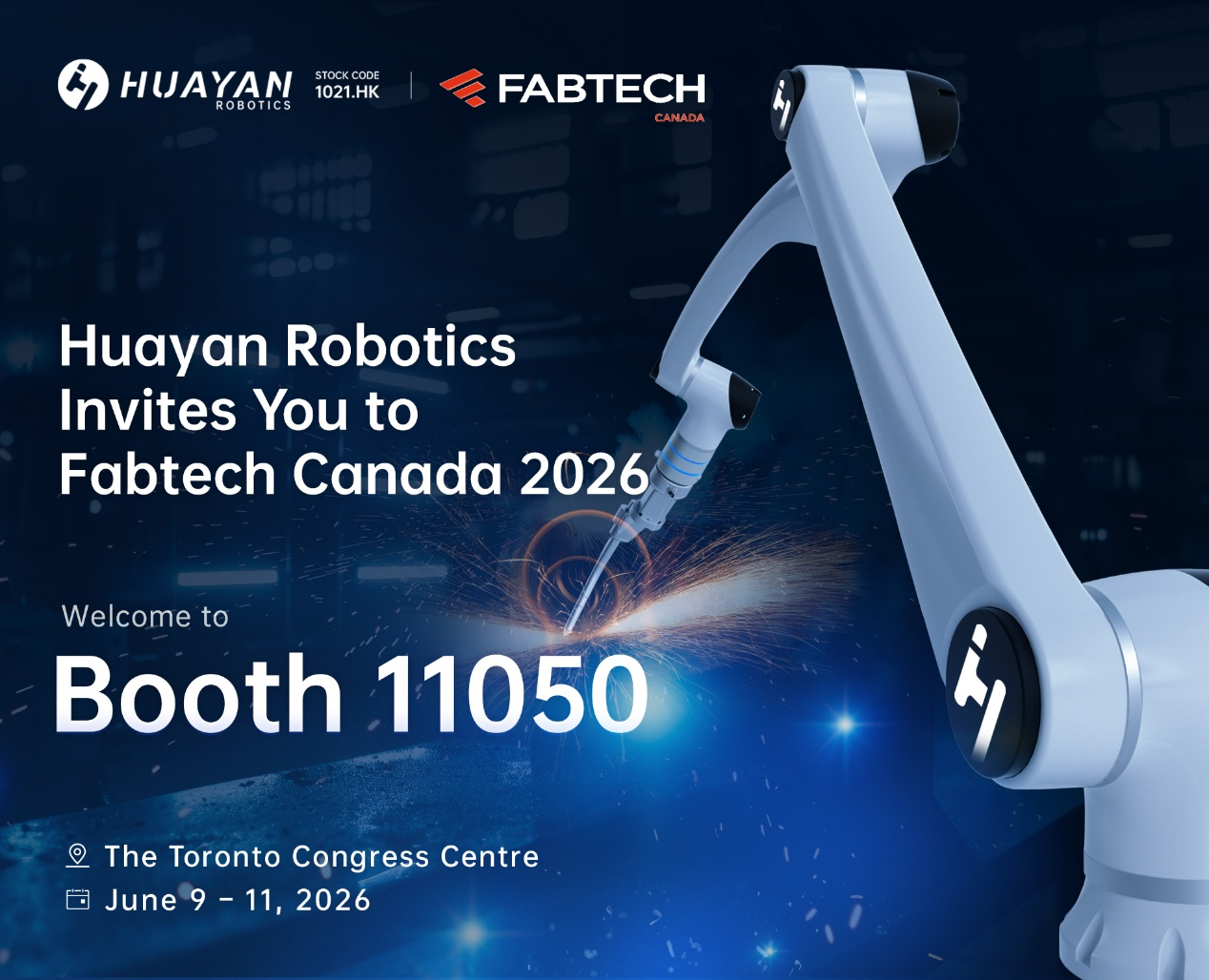
Huayan Robotics is bringing this philosophy to the floor at FABTECH Canada 2026 in Toronto. Rather than just showing off hardware, they are positioning their latest lineup as a comprehensive ecosystem for metal fabrication. The star of their booth is undoubtedly the 1.8-meter reach welding cobot. It’s a significant spec for those dealing with large-scale structural steel where reach and accessibility are constant headaches. By integrating laser seam tracking and real-time arc correction, they are tackling the consistency issues that usually plague automated welding on irregular workpieces. The force-controlled programming is the real differentiator here, allowing operators to guide the robot manually with minimal resistance, which effectively turns the machine into an extension of the welder’s own arm.
The company is also expanding its footprint beyond the weld bead. They are demonstrating the S50 heavy-payload robot, a 50kg-capacity unit designed for the grunt work of CNC loading and palletizing. This is a smart play. By pairing high-precision welding with heavy-duty material handling, Huayan is trying to capture the entire workflow of a modern machine shop. It’s a pragmatic approach that acknowledges that automation is only as good as the weakest link in the production chain.
Looking at the broader horizon, the metal fabrication sector is at a critical inflection point. We are moving away from the era of rigid, caged industrial robots toward a more fluid, collaborative environment. The labor shortage in skilled trades isn’t going away, and the only viable path forward is to augment human expertise with intelligent, adaptive systems. The trend toward “process-integrated” robotics—where the software understands the physics of the weld or the geometry of the part—is where the real value lies. Manufacturers are no longer looking for machines that just move; they are looking for machines that understand the context of the task. As Huayan and its peers continue to refine these force-control algorithms and intuitive interfaces, we should expect to see a rapid acceleration in the adoption of cobots in heavy industries that were previously considered too complex or too variable for automation. The future of the shop floor isn’t about replacing the welder; it’s about giving them a tool that handles the repetition while they focus on the quality.
This article is provided by a third-party content provider. SeaPRwire (https://www.seaprwire.com/) makes no warranties or representations regarding its content.
Category: Top News, Daily News
SeaPRwire provides global press release distribution services for companies and organizations, covering more than 6,500 media outlets, 86,000 editors and journalists, and over 3.5 million end-user desktop and mobile apps. SeaPRwire supports multilingual press release distribution in English, Japanese, German, Korean, French, Russian, Indonesian, Malay, Vietnamese, Chinese, and more.