By: Lucas Caldwell
(SeaPRwire) – The market just witnessed a gravitational shift. SpaceX finally hit the ticker, and the numbers are absurd. We are looking at a two-trillion-dollar entity born from a single IPO session. This isn’t just a listing; it is a forced re-calibration of the entire aerospace and AI sector. The private era is over. The public markets now own the future of Mars and the global internet backbone. It redefines late-stage liquidity events forever.
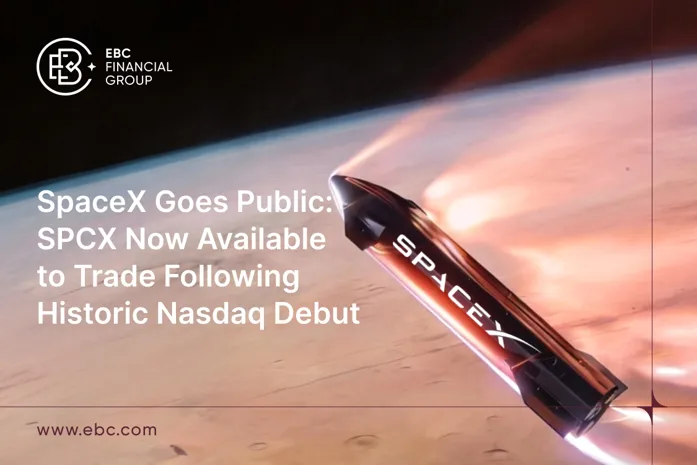
EBC Financial Group flipped the switch on SPCX at 16:31 UTC+3 on Friday, 12 June 2026. The instrument went live right alongside the Nasdaq debut. The raise was massive, hitting US$75 billion with an issue price of US$135 per share. That initial valuation sat around US$1.75 trillion. By the closing bell, shares had jumped nineteen percent. They settled near US$161. That pushed the market cap well over the two-trillion-dollar mark immediately. It is now available globally on both Standard and Professional accounts.
This giant combines rockets, satellites, and the xAI acquisition from February 2026. Traders can access it all without new onboarding or capital allocation hurdles. EBC is even waiving commissions on US stocks and ETFs until 11 September 2026. You can go long on Starlink revenue or short the capital intensity risks. The total addressable market claimed in the filing is US$28.5 trillion. Most of that figure relies on AI and enterprise applications. The debate on that number starts now.
A twenty-eight-trillion-dollar addressable market claim is either genius or madness. It forces competitors to re-evaluate their own ceilings. If SpaceX owns the vertical stack from launch to inference, the margins for pure-play satellite operators vanish. The defense contractors are next. They can no longer hide behind cost-plus models when a public entity sets this efficiency benchmark. The pressure to consolidate will ripple through the entire supply chain instantly.
Investors are not buying a rocket company; they are buying an AI infrastructure play disguised as aerospace. The xAI integration is the real payload here. It justifies the premium multiple that traditional industrial logic cannot support. We will see a massive rotation of capital out of legacy tech into this new hybrid category. The zero-commission window is the accelerant. It invites speculative volume that will cement this price floor before reality sets in.
The next six months will determine if that valuation is a floor or a ceiling for the entire global tech sector.
Author bio: Lucas Caldwell, a tech opinion leader with millions of followers on X/Twitter, known for his sharp insights on market trends.