By: Oliver Hawthorne
European shipowners are stuck between a rock and a hard place. The EU’s ETS and FuelEU Maritime rules are forcing rapid zero-emission shifts. But current marine battery options fail on three critical fronts. They can’t deliver consistent power for high-demand duty cycles. They eat up too much valuable onboard space. And fire risks make fleet operators wary of lithium-ion systems. This is the industry’s quiet, unaddressed crisis.
Taiwan-based XING Mobility just launched its IMMERSIO™ Matrix marine battery system to fix these gaps.
(SeaPRwire) – 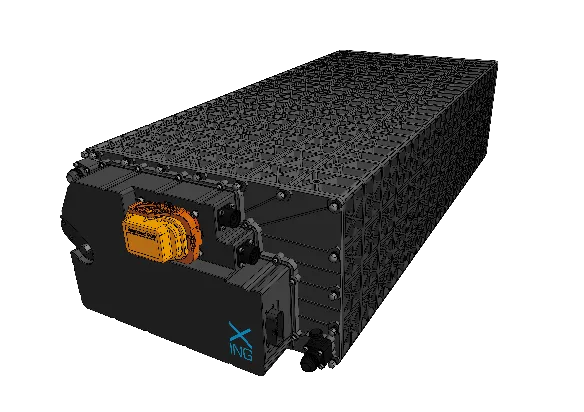
The IMMERSIO™ CTP battery system: built for marine electrification with twice the energy density, continuous 3C discharge, and active fire safety.
The unit will debut at the Electric & Hybrid Marine Expo in Amsterdam June 16–18, with exclusive Scandinavian distribution via Nordic Booster AS. The system hits three key metrics: continuous 3C power, which beats all mainstream marine-certified batteries. It offers twice the energy density of conventional options, saving space for cargo or passengers. And its full immersion cooling architecture stops thermal runaway and cell-to-cell fire spread entirely. Real-world tests are already underway: the Porrima P111 zero-emission vessel runs on XING batteries in Taiwan, and an Austrian Smart IQ vessel completed integration tests in late April 2026. The scalable 60–400 kWh system is undergoing DNV certification.
Nordic Booster’s 20 years of maritime engineering expertise means European shipowners get local support and fast installation. The company’s leadership has already praised the system’s unmatched combination of power, density, and safety. XING’s 2024 mass-production facility for immersion cooling batteries means supply won’t be a bottleneck. This system doesn’t just offer a better battery—it redefines what’s possible for electric marine propulsion. Immersion cooling will quickly become the standard for marine battery systems worldwide. Any marine battery maker not investing in immersion cooling by the end of 2026 will be out of the European market.
Author bio: Oliver Hawthorne, a Principal Correspondent for a leading international technology review focused on advanced industrial and mobility hardware.