
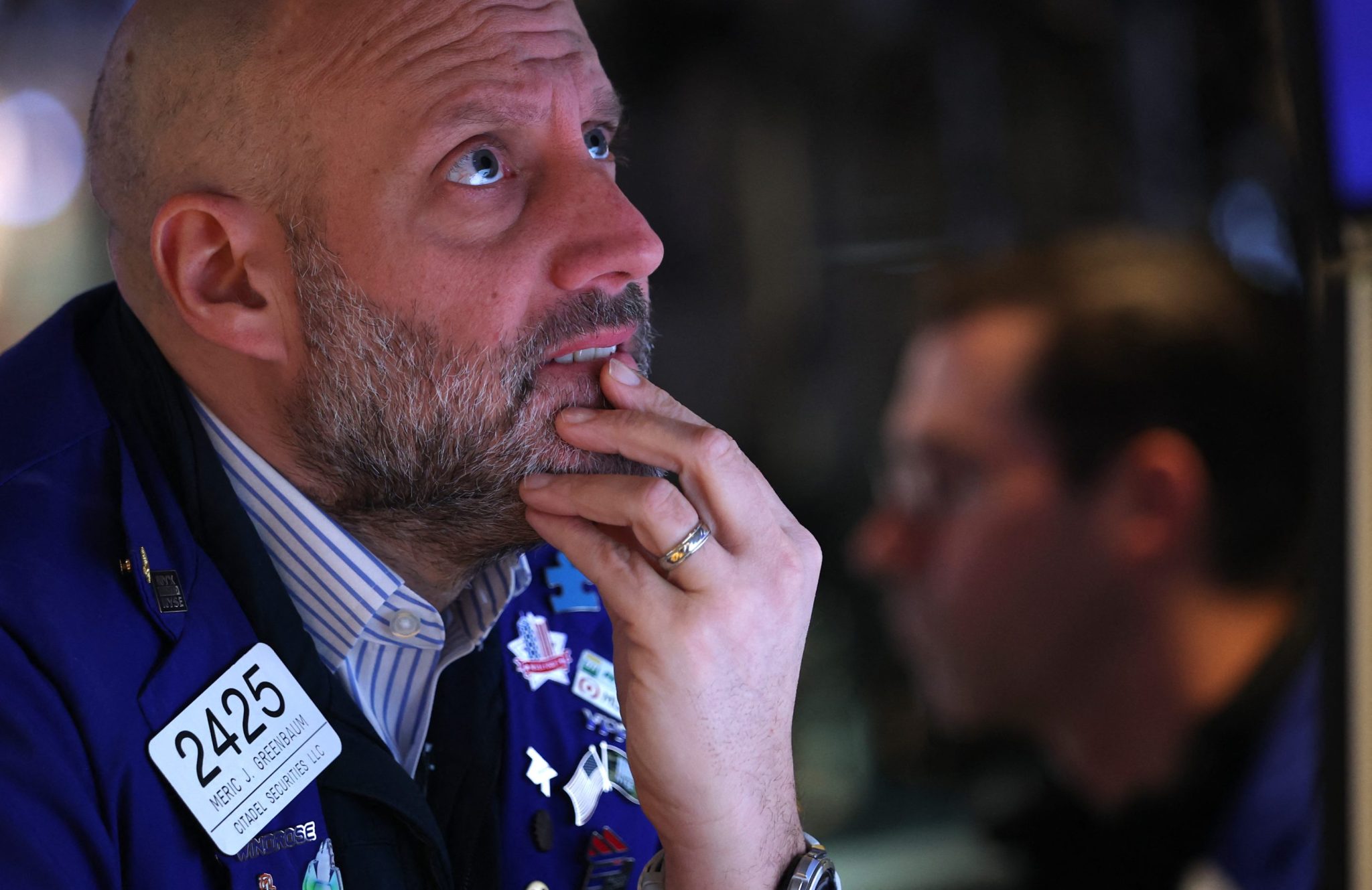
Investors are aggressively offloading U.S. assets this Tuesday: The yield on the 10-year Treasury note reached its highest level since August, the U.S. dollar declined, and traditional safe-haven metals—gold and silver—climbed to new record highs.
The CEO of the world’s largest private bank views this market behavior as a “dangerous bet.”
“It is not possible to diversify away from America,” UBS CEO Sergio Ermotti stated in a Bloomberg television interview at the World Economic Forum in Davos, Switzerland, on Tuesday. “Conditions can shift quickly, and the U.S. remains the world’s strongest economy, currently leading in innovation.”
The selloff was triggered by a renewed escalation from U.S. President Donald Trump, who has threatened a 10% tariff on eight European allies—including Germany, France, and the UK—if they do not acquiesce to his demands regarding Greenland.
Trump also proposed a 200% tariff on French wines and champagnes to compel French President Emmanuel Macron to join his Nobel Peace board. The return of Trump’s favored “Mr. Tariff” tactics has unsettled bond investors with increased volatility.
However, Ermotti contended that if investors remain fixated on short-term political turbulence and avoid the U.S., they risk losing sight of the bigger picture. Acknowledging the current “bumpy” climate, he highlighted a key figure: the U.S. generated 25 million new millionaires last year alone. For a wealth manager such as UBS, this equates to 1,000 new millionaires daily. Abandoning the innovative potential of U.S. equities for gold, he argued, would be a knee-jerk reaction that overlooks the long-term innovative strength of the U.S. economy.
“We identify two major drivers: firstly, wealth creation, GDP growth, and innovation, and secondly, more specific to UBS, we see an opportunity to expand our presence and grow our market share,” Ermotti said.
Yet, if the impasse between the European Union and Trump persists, it could lead to further de-dollarization, this time driven by European sales of U.S. bonds, George Saravelos, head of FX research at Deutsche Bank, suggested in a Sunday note. Substantiating this concern, Danish pension funds sold $100 million in U.S. Treasuries on Tuesday, citing ostensibly “poor” U.S. finances, though the pension fund’s chief remarked on the Greenland controversy: “Naturally, that did not complicate the decision.”
Europe holds twice the amount of U.S. bonds and equities as the rest of the world put together. Should the rest of Europe emulate Denmark, an $8 trillion market could be in jeopardy, Saravelos warned.
“In a climate where the geoeconomic stability of the Western alliance is being fundamentally undermined, it is uncertain why Europeans would remain willing to fulfill this role,” he wrote.
In the United States, markets also retreated as the Dow Jones Industrial Average and S&P 500 both dropped 2% on Tuesday, a decline already equivalent to Greenland’s entire economic value based on Trump’s threats, noted University of Michigan economist Justin Wolfers. Analysts and investors are wary, recalling Trump’s pattern of announcing severe tariffs before negotiating them down—a phenomenon dubbed the “TACO” (Trump Always Chickens Out) effect. Investors have previously been “hurt by overreacting to tariff threats,” commented Jim Reid of Deutsche Bank. This aligns with the UBS CEO’s position. Overreacting to news headlines, he implied, means missing the transformative innovation that has driven the stock market to successive record highs over the past three years.
“I would not advise betting against the United States,” he concluded.