
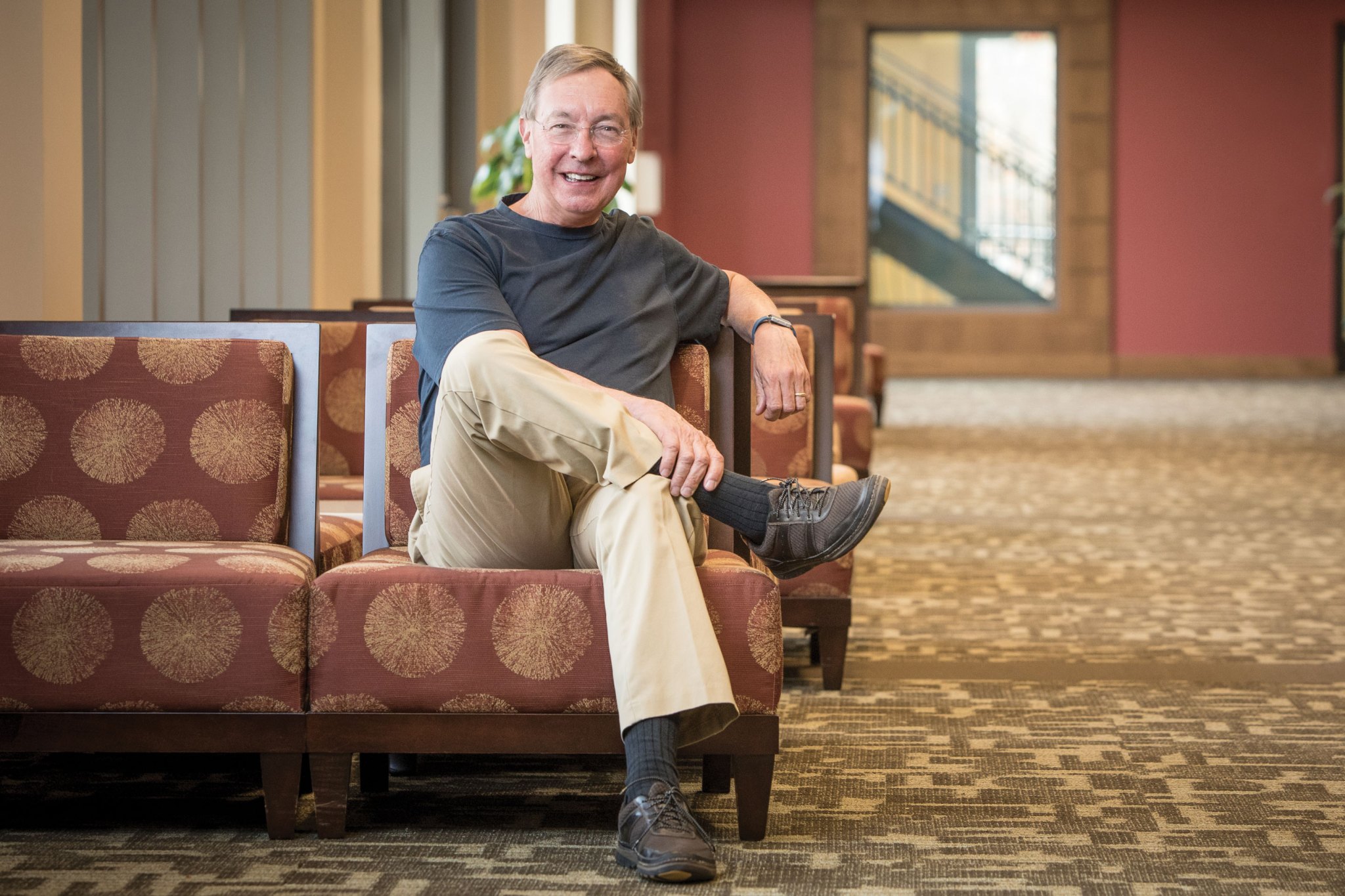
(SeaPRwire) – The American education system faces a pivotal moment. As AI firms predict a complete transformation of the workforce, the very meaning of career readiness is evolving, leaving uncertainty in its wake. According to education advocate Ted Dintersmith, the urgency for change is immense.
“We are entering a world where numerous jobs will simply disappear. We cannot afford a decade-long adjustment period,” Dintersmith stated. “Should students invest thousands of hours in academic math they will never use, or should they master a skill that leads to a rewarding and sustainable career? The fundamental question is: do we prioritize a child’s future or the data used for state rankings?”
In his new book, Aftermath: The Life-Changing Math That Schools Won’t Teach You, Dintersmith contends that the current educational framework is set up for student failure. He argues it continues to teach skills that machines can perform effortlessly, while neglecting practical, real-world knowledge. The mathematics curriculum, in particular, is criticized for its lack of relevance to daily life and work, a shortcoming he believes is damaging to American society. He advocates for a shift towards practical probability and statistics over traditional algebra and calculus.
This publication concludes 15 years of his research into the strengths and flaws of American schooling. He describes a system that measures success through “high-stakes” standardized tests featuring questions easily answered by computers, yet fails to equip students with the abilities needed for their future lives and professions. Dintersmith warns that without reform, millions will reach adulthood ill-prepared, potentially planting “the seeds for democracy’s collapse.”
His critique extends beyond mathematics; he also calls for a re-evaluation of the standard high-school-to-college trajectory, especially as more graduates question the value of their expensive degrees.
A 2023 visit to a school district in Winchester, Va., a town of approximately 28,000 near Washington, D.C., offered a glimpse of an alternative. There, he observed students at the Emil & Grace Shihadeh Innovation Center, a technical training facility for high schoolers. While such centers are common, Dintersmith noted Winchester’s model is distinct because vocational training is not viewed as a dumping ground for students not pursuing college.
He emphasized that the center was integral, not an afterthought, with around 90% of the district’s high school students enrolling in a class there. This inspiring experience prompted him to create the film Multiple Choice in 2025, which was screened at the Sundance Film Festival this year.
An unlikely advocate
At 73, Dintersmith is a surprising figure leading the charge for educational transformation. His career began after graduating from the College of William & Mary in 1974 and earning a PhD in engineering from Stanford University in 1981. He spent seven years at a microchip startup before becoming a venture capitalist and general partner at Charles River Ventures, where he remained for over two decades and now holds the title of partner emeritus.
During his tenure at CRV, he managed funds from $50 million to over $450 million and was once ranked the nation’s top-performing venture capitalist by Business 2.0 magazine for the period from 1995 to 1999. He attributes his dramatic career shift to having children later in life.
Dintersmith admits that his focus on education was unexpected even to him.
“I never envisioned working on school-related issues,” Dintersmith said. “Then, when my children reached middle school, I thought, ‘This doesn’t make any sense.’” His engagement began in 2011 when his son’s school introduced a life skills program that he found irrelevant. His son and daughter are now in their 30s.
Since that time, he has authored three books and produced nine documentaries highlighting the shortcomings of the U.S. education system. His commitment included an “education odyssey” during the 2016 school year, visiting 200 schools in all 50 states to observe their operations, which he documented in his 2018 book What School Could Be.
Vocational training opens doors
At Winchester’s Innovation Center, students were not forced to choose between welding and Advanced Placement Chemistry to prove their academic merit to colleges, as vocational training was standard. The curriculum included carpentry, welding, plumbing, electrical work, and training for roles like EMTs, lab technicians, firefighters, and nursing aides. These courses are aligned with local economic needs, and many instructors are local business owners or professionals who volunteer their time. A number of students have subsequently begun careers with their instructors’ companies.
One student featured in the documentary, Liz, is now a pre-law student at the University of Virginia and highlighted her welding experience in her college applications. Another student, Malachi, joined a firefighting class seeking “guidance in life and discipline.” He became a volunteer firefighter outside of class, finding mentorship and a sense of belonging at the local fire station.
“The focus was on helping every student find their path, directly connected to skills that would benefit the local community,” Dintersmith said.
He believes Winchester provides a blueprint for other schools. Since many high schools already have career and technical education programs, “they’re not starting from zero,” he noted. He stressed that community involvement is crucial, pointing out that the 54,000 square-foot Innovation Center was funded by a $1 million donation from a local philanthropist, with additional support from the State of Virginia and the community.
“The goal is to bridge the gap between graduating high school and being able to confidently say, ‘I am skilled at something that has value in the adult world,’” he explained.
This article is provided by a third-party content provider. SeaPRwire (https://www.seaprwire.com/) makes no warranties or representations regarding its content.
Category: Top News, Daily News
SeaPRwire provides global press release distribution services for companies and organizations, covering more than 6,500 media outlets, 86,000 editors and journalists, and over 3.5 million end-user desktop and mobile apps. SeaPRwire supports multilingual press release distribution in English, Japanese, German, Korean, French, Russian, Indonesian, Malay, Vietnamese, Chinese, and more.